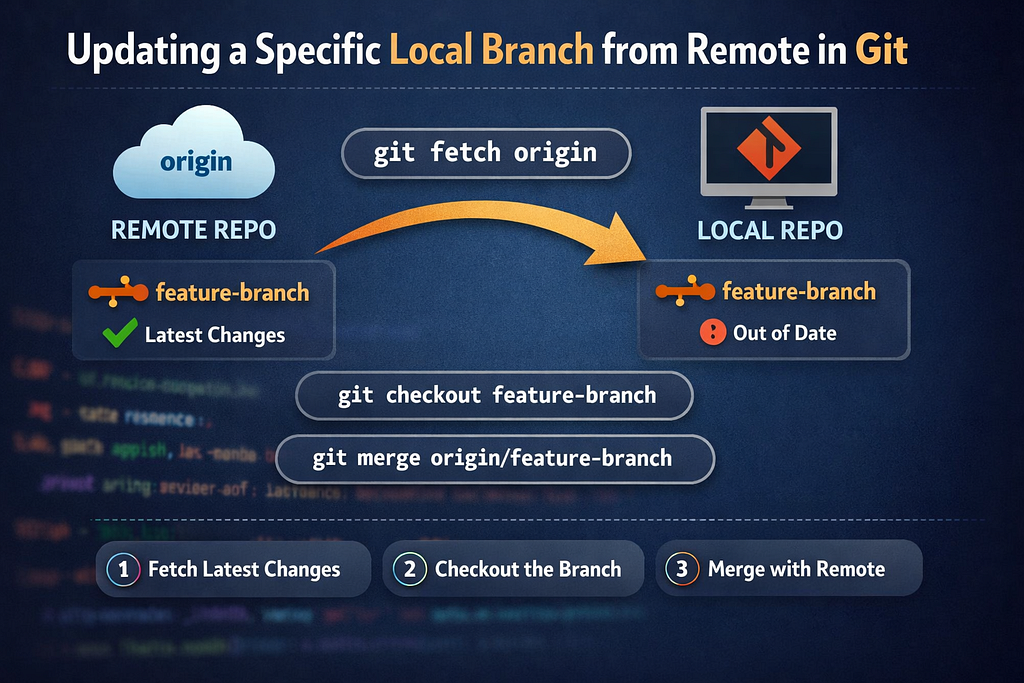
Whether you’re collaborating on a feature or just keeping your work in sync, pulling changes to a non-main branch is a daily task for most developers. Here is how to do it cleanly.
The Standard Approach
If you are already working on your local branch (let’s call it feature-login), You can pull changes directly from the remote version of that branch.
# 1. Switch to your feature branch
git checkout feature-login

# 2. Pull changes from the remote 'origin' into your current branch
git pull origin feature-login
What happens behind the scenes?
The git pull command is actually a combination of two actions:
- git fetch: It downloads the new data from the remote repository.
- git merge: It immediately tries to combine those changes into your local files.
The Cleanest Method: Rebase
If you have local commits that haven’t been pushed yet, a standard pull creates a “merge commit.” To keep your history linear and easy to read, use the rebase flag.
# Pull and replay your local work on top of the incoming changes
git pull --rebase origin feature-login
The Pro Workflow: Step-by-Step
If you want total control and want to see what’s coming before you merge it, follow this three-step flow:
1. Update your local “view” of the remote
git fetch origin
This updates origin/feature-login in your local database, but doesn't touch your code yet.
2. Compare the differences
git log HEAD..origin/feature-login --oneline
This shows you exactly which commits are on the server that you don’t have yet.
3. Bring the changes in
git merge origin/feature-login
Common Gotchas
- Merge Conflicts: If you and a teammate edited the same line, Git will pause. You’ll need to open the files, pick the correct code, and run git commit to finish.
- Wrong Branch: Always run git branch before pulling to ensure you aren't accidentally pulling feature code into your main branch.
Updating your Local Branch from a Specific Remote Branch in Git was originally published in The Owl on Medium, where people are continuing the conversation by highlighting and responding to this story.
Originally published on Medium.